Checked against official state laws and government sources. Laws and fines change, so confirm with the sources listed at the end.
The Florida school zone speed limit can be no higher than 20 mph in an urbanized area and generally no lower than 15 mph, and it applies from 30 minutes before to 30 minutes after students arrive and leave. Speeding fines in a posted school zone are doubled under state law, and since 2023 cities and counties can mail $100 camera tickets to drivers going more than 10 mph over the limit.
Key facts
- School zone limits are 15 to 20 mph in urbanized areas, set by Florida Statutes § 316.1895.
- The reduced limit is in force 30 minutes before, during and 30 minutes after school arrival and dismissal, including breakfast programs.
- The base fine for speeding in a school zone is two times the normal amount, and even 1 to 5 mph over costs $50 before court costs.
- Camera tickets are a flat $100 for driving more than 10 mph over, with no license points and no use for insurance rates.
- An officer issued school zone ticket adds 3 points (4 points if more than 15 mph over).
- Using a phone in a handheld manner in a school zone is a moving violation worth 3 points.
What is the Florida school zone speed limit?
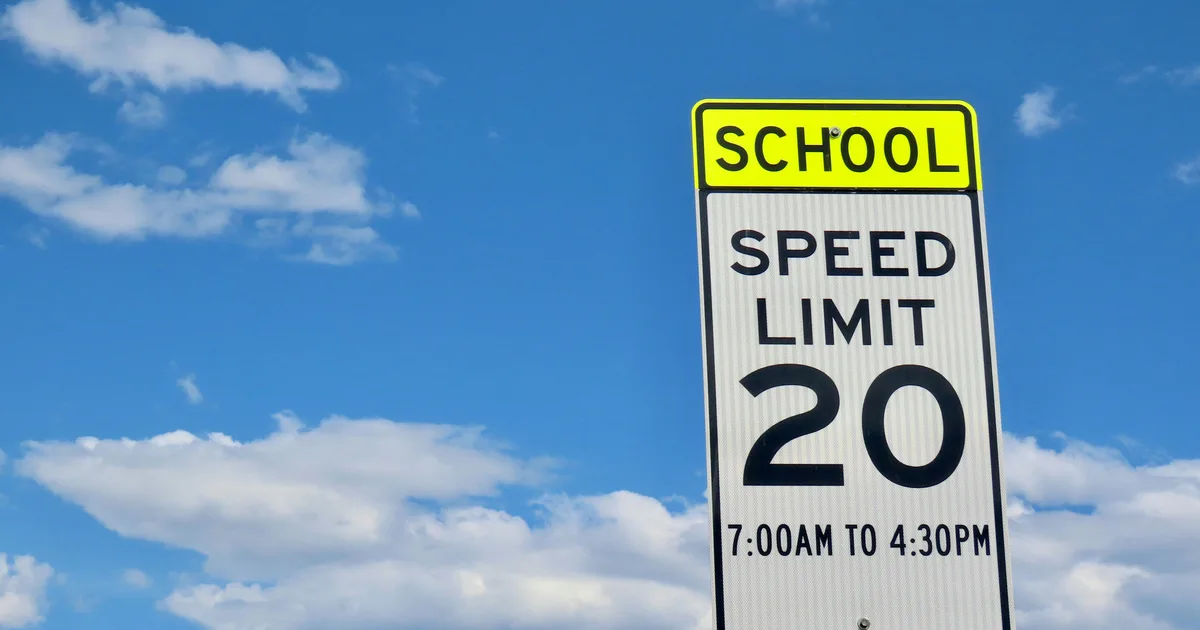
Florida's school zone law is Florida Statutes § 316.1895. It says a school zone speed limit may not be less than 15 mph unless a local regulation sets a different limit, and that "no school zone speed limit shall be more than 20 miles per hour in an urbanized area." In practice, most Florida school zones you drive through in cities and suburbs are posted at 20 mph, with some at 15 mph.
The statute's core rule is simple: "A person may not drive a vehicle on a roadway designated as a school zone at a speed greater than that posted." There is no buffer. A driver doing 24 mph in a 20 mph zone is breaking the law, and as you will see below, Florida still fines that driver.
Who maintains the zone depends on the road. The Florida Department of Transportation handles zones on state roads, counties handle county roads outside city limits, and cities handle roads inside their limits. Sheriff's offices or police departments inspect the zones periodically.
Signs and flashing beacons
Permanent school zone signs must be uniform in size and color and must clearly show the times the limit is enforced. A local authority can use flashing beacons instead of posted times, triggered by a time clock, another automatic device or by hand. Zones created since July 1, 2008, and zones whose signs were replaced since then, must also carry a "Speeding Fines Doubled" sign. Portable school zone signs are allowed but may only be placed on the road during arrival and departure hours.
For how other states handle signs and limits, see our school zone speed limits by state guide.
Florida school zone hours: when does the limit apply?
Florida does not use a fixed clock window statewide. Under § 316.1895, the school zone limit "may be in force only during those times 30 minutes before, during, and 30 minutes after" students arrive at a regularly scheduled breakfast program or school session, and when they leave a session.
That means the hours are different at every school. A school with a 7:45 a.m. start may have a zone active from roughly 7:15 a.m. to 8:15 a.m., while a nearby elementary school with an 8:30 a.m. bell runs later. The posted sign or the flashing beacon tells you which times apply at that location.
How much is a school zone ticket in Florida?
Florida sets base speeding fines statewide in Florida Statutes § 318.18(3). On a normal road, 1 to 5 mph over is a warning. In a school zone, the rules change in two ways:
- A driver cited for going up to 5 mph over in a legally posted school zone is fined $50.
- For anything more, the driver "shall pay a fine double the amount" listed in the regular speeding schedule.
That doubling is the "double fines school zone Florida" rule people search for. It applies to officer issued tickets. It does not apply to camera tickets, which have their own flat penalty described below.
| Speed over the limit | Regular base fine | School zone base fine | Example total, Miami-Dade school or construction zone |
|---|---|---|---|
| 1 to 5 mph | Warning | $50 | $169 |
| 6 to 9 mph | $25 | $50 | $169 |
| 10 to 14 mph | $100 | $200 | $319 |
| 15 to 19 mph | $150 | $300 | $419 |
| 20 to 29 mph | $175 | $350 | $469 |
| 30 mph and above | $250 | $500 | $619 |
The base fines come from § 318.18. What you actually pay is higher because each county adds court costs and fees. The last column shows the totals listed by the Miami-Dade Clerk of the Court for speeding in a school or construction zone. Other counties publish their own schedules, and totals differ by a few dollars to a few dozen dollars, so check the clerk's site for the county on your ticket.
For a real scenario: a driver going 35 mph in a 20 mph school zone is 15 mph over. The base fine is $300, double the regular $150, and the Miami-Dade total is $419. The same speed on a regular road would carry a $269 total in that county. For a national comparison, see how much school zone tickets cost.
Points on your Florida license
Florida's point schedule is in Florida Statutes § 322.27(3). School zone speeding uses the same speed bands as any other speeding ticket.
| Violation | Points |
|---|---|
| Speeding 15 mph or less over the limit | 3 |
| Speeding more than 15 mph over the limit | 4 |
| Unlawful speed resulting in a crash | 6 |
| Moving violation committed together with unlawful wireless device use in a school safety zone | 2 additional points |
| School zone speed camera ticket | 0 |
Points add up toward suspension. Under § 322.27, 12 points within 12 months can bring a suspension of up to 30 days, 18 points within 18 months up to 3 months, and 24 points within 36 months up to one year. Points also tend to raise insurance premiums, which often costs more over time than the fine itself.
Florida school zone speed cameras
In 2023 the Legislature passed CS/CS/HB 657, Enforcement of School Zone Speed Limits. Governor DeSantis approved it on May 31, 2023 as Chapter 2023-174, and it took effect July 1, 2023. The law lets counties and cities use speed detection systems in school zones and mail citations to the registered owner.
When a city or county can use cameras
A local government cannot simply put up a camera. Under Florida Statutes § 316.008(9), it must pass an ordinance. At the public hearing it must consider traffic data or other evidence for each camera and find that the school zone "constitutes a heightened safety risk that warrants additional enforcement measures."
What triggers a camera ticket
The 10 mph threshold and the hours are spelled out in Florida Statutes § 316.1896(1). A camera ticket can be issued for driving in excess of 10 mph over the school zone limit during these windows:
- 30 minutes before through 30 minutes after the start of a regularly scheduled breakfast program.
- 30 minutes before through 30 minutes after the start of a regularly scheduled school session.
- 30 minutes before through 30 minutes after the end of a regularly scheduled school session.
The statute adds one more window that surprises drivers: during the entire regularly scheduled school day, a camera can also ticket a driver going more than 10 mph over the normal posted limit in the zone. So on a road posted 40 mph outside the school zone hours, a car doing 51 mph at 11:00 a.m. on a school day could get a camera ticket even though the 20 mph limit is not active.
In plain numbers, a driver doing 31 mph in an active 20 mph school zone (11 mph over) can be ticketed by a camera. A driver doing 30 mph (exactly 10 over) cannot be ticketed by the camera, but an officer could still write a ticket with doubled fines.
Signs and the warning period
Florida Statutes § 316.0776(3) requires signs announcing photo or video enforcement of the school zone speed limit, and those signs must show the time period when the camera enforces it. A city or county starting its first program must run a public awareness campaign for at least 30 days before enforcement begins, and only warnings can be issued during that period.
How much is a Florida school zone camera ticket?
The penalty is $100, as set in § 318.18(3)(d) and broken down in § 316.1896(5). Of that, $60 stays with the city or county for the camera program and other public safety work, $20 goes to state general revenue, $12 goes to the local school district for school security, student transportation or walking safety, $5 funds a school crossing guard program, and $3 goes to a law enforcement training fund. The camera penalty is not doubled.
Camera tickets carry no points, and § 322.27 says these violations cannot be used to set insurance rates. That is a big difference from an officer issued ticket.
What happens after the camera flashes
- The owner must be mailed a notice of violation by first class mail within 30 days. It includes a photo or video, the date, time, location and speed, and tells you where you can review the evidence.
- Within 30 days of the notice, you can pay the $100, request a hearing, or submit an affidavit if someone else was driving or the car was stolen.
- If you do nothing, a uniform traffic citation is sent by certified mail. At that point court costs and fees can be added.
You do not have to pay before a hearing. Testimony is under oath, formal rules of evidence do not apply, and appeals follow the local code enforcement appeal process. Recorded images must be destroyed within 90 days after the case is finally resolved, and the cameras cannot be used for general surveillance. More detail on how camera programs work across the country is in our school zone speed cameras guide.
Handheld phone ban in Florida school zones
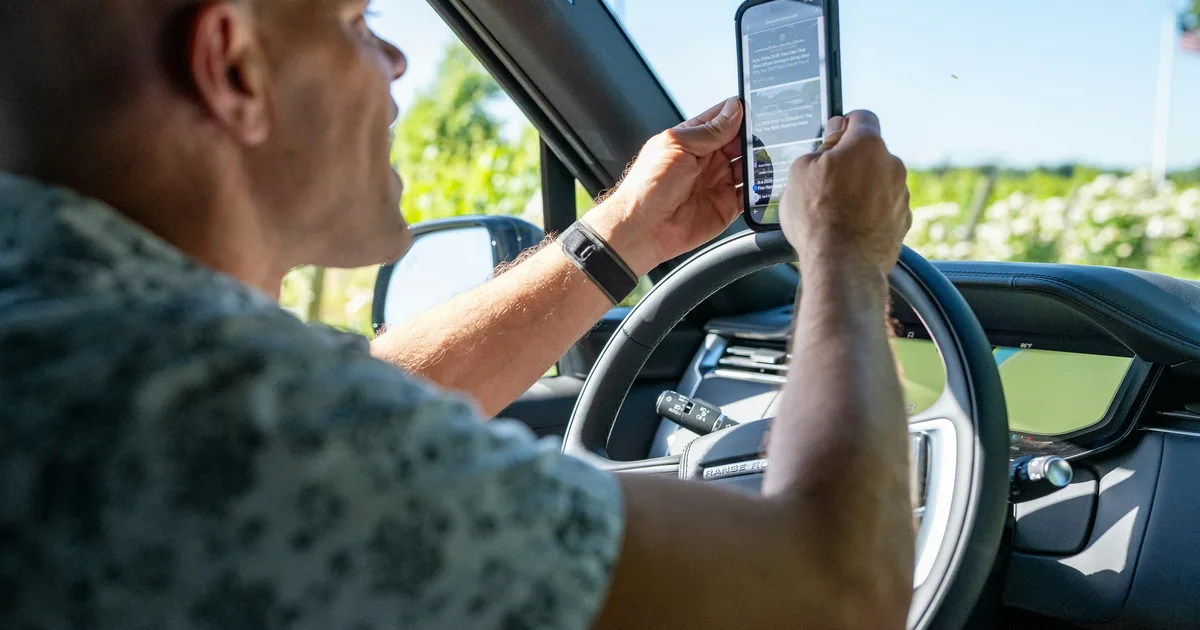
Florida has two phone laws that matter near schools. Florida Statutes § 316.306 bans using a wireless communications device in a handheld manner while driving in a designated school crossing, school zone, or active work zone. Officers have been able to stop drivers and write tickets for it since January 1, 2020.
Hands free calls, voice operated use and hands free navigation are allowed. So are emergency calls and reports of criminal or suspicious activity to police. A stopped car is not being operated, so the rule does not cover a parked vehicle.
A violation is a noncriminal moving violation with 3 points. A first time offender can choose a wireless communications device driving safety program instead, which can waive the penalty and points.
Separately, Florida Statutes § 316.305 bans texting, emailing and messaging while driving anywhere in the state. A first offense is a nonmoving violation; a second within five years is a moving violation. Our phone use in school zones article compares these rules with other states.
How to pay or contest a Florida school zone ticket
For an officer issued civil ticket, Florida Statutes § 318.14 gives you 30 days from the date the citation was issued to act. You have three main choices, all handled through the clerk of court in the county where you got the ticket:
- Pay the fine (or set up a payment plan with the clerk). Paying counts as admitting the infraction, and points go on your record.
- Elect traffic school, if eligible, to keep points off your record.
- Request a hearing in county court to contest the ticket.
Missing the deadline only makes things worse, so do not ignore the ticket. Camera tickets follow the separate process described in the camera section above.
Florida traffic school for a school zone ticket
Under § 318.14(9), a driver without a commercial license can elect a basic driver improvement course approved by the Florida Department of Highway Safety and Motor Vehicles instead of going to court. If you do:
- Adjudication is withheld.
- No points are assessed.
- The civil penalty is reduced by 18 percent.
You can only make this election once in any 12 month period and no more than eight times in your lifetime. Drivers with a commercial driver license or commercial learner's permit cannot use it, and some violations, such as certain tickets for going 30 mph or more over, are excluded. Elect the course through the clerk before your deadline, then complete it within the time the clerk gives you.
If you drive the same school routes every day, an app such as SchoolSlow can warn you as you enter a school zone so you are not relying on spotting the sign in time.
Frequently asked questions
What is the school zone speed limit in Florida?
In an urbanized area, a Florida school zone limit cannot be more than 20 mph, and it generally cannot be less than 15 mph unless a local regulation sets a different limit. Most zones are posted at 20 mph. Always follow the number on the sign.
What are Florida school zone hours?
The limit applies from 30 minutes before, during, and 30 minutes after students arrive for a breakfast program or school session and when they leave. The exact times differ at every school and are shown on the sign or by flashing beacons.
How much is a school zone speeding ticket in Florida?
The base fine is double the regular speeding fine, and even 1 to 5 mph over costs $50. For example, 10 to 14 mph over has a $200 base fine. County court costs are added, so Miami-Dade lists $319 for that speed in a school zone.
Are fines really doubled in Florida school zones?
Yes. Florida Statutes § 318.18(3)(c) says a driver speeding in a school zone pays double the regular fine. The doubling applies to officer issued tickets, not to the flat $100 camera penalty.
How much is a Florida school zone camera ticket?
It is $100 if paid within 30 days of the notice. Cameras can only ticket drivers going more than 10 mph over the limit. The ticket carries no points and cannot be used to raise your insurance rates.
Do Florida school zone cameras work all day?
For the school zone limit, cameras work only during the 30 minute windows around the start of breakfast programs and the start and end of the school day. During the rest of the school day, they can ticket drivers more than 10 mph over the regular posted limit.
Can I use my phone in a Florida school zone?
Not in your hand. Florida Statutes § 316.306 bans handheld use in school zones and school crossings, and a violation is a moving violation with 3 points. Hands free calls and hands free navigation are allowed.
Can I take traffic school for a Florida school zone ticket?
Usually, yes. If you are eligible, electing a basic driver improvement course keeps points off your record and reduces the civil penalty by 18 percent. You can use it once every 12 months and up to eight times in your life.
Sources
- Florida Statutes § 316.1895, Establishment of school speed zones, enforcement; designation, Florida Legislature, accessed November 2026.
- Florida Statutes § 318.18, Amount of penalties, Florida Legislature, accessed November 2026.
- Civil Traffic Infractions, Miami-Dade Clerk of the Court and Comptroller, accessed November 2026.
- Florida Statutes § 322.27, Authority of department to suspend or revoke driver license, Florida Legislature, accessed November 2026.
- CS/CS/HB 657 (2023), Enforcement of School Zone Speed Limits, The Florida Senate, accessed November 2026.
- Florida Statutes § 316.008, Powers of local authorities, Florida Legislature, accessed November 2026.
- Florida Statutes § 316.1896, School zone speed detection systems, Florida Legislature, accessed November 2026.
- Florida Statutes § 316.0776, Traffic infraction detectors; speed detection systems; placement and installation, Florida Legislature, accessed November 2026.
- SB 654 (2026), Traffic Infraction Enforcement, The Florida Senate, accessed November 2026.
- Florida Statutes § 316.306, School and work zones; prohibition on the use of a wireless communications device in a handheld manner, Florida Legislature, accessed November 2026.
- Florida Statutes § 316.305, Wireless communications devices; prohibition, Florida Legislature, accessed November 2026.
- Florida Statutes § 318.14, Noncriminal traffic infractions; exception; procedures, Florida Legislature, accessed November 2026.