Checked against official state laws and government sources. Laws and fines change, so confirm with the sources listed at the end.
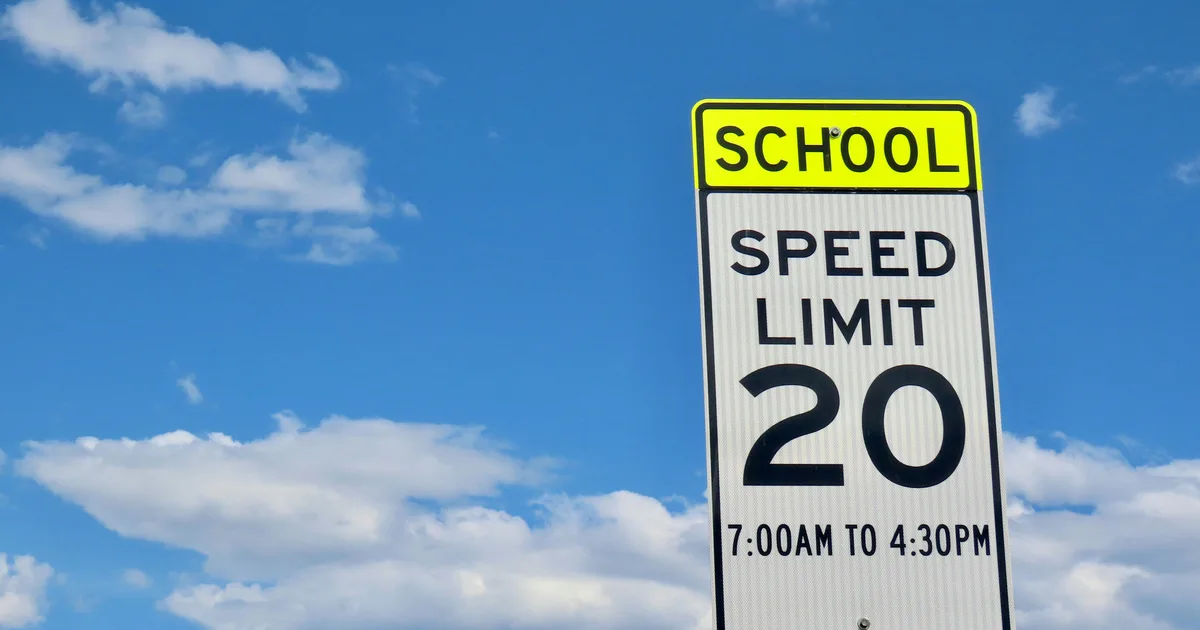
South Carolina has no single statewide school zone speed limit. SCDOT and local governments set each zone after an engineering study under S.C. Code §§ 56-5-1530 and 56-5-1540, and SCDOT guidance usually lowers the limit by 10 to 15 mph while the beacons flash or during the posted hours. A school zone speeding ticket uses the regular fines in § 56-5-1520, from $15 to $200 depending on speed, plus a mandatory 107.5% state assessment and 2 to 6 points on your license.
Key facts
- School speed limits are posted by SCDOT or local authorities under §§ 56-5-1530 and 56-5-1540. SCDOT guidance calls for a cut of at least 10 mph and no more than 25 mph, typically 10 mph on 35 to 50 mph roads and 15 mph on 50 to 60 mph roads.
- SCDOT school flashers usually run from 30 minutes before to 15 minutes after the morning bell, and from 15 minutes before to 30 minutes after dismissal.
- State law sets no extra school zone fine. Speeding fines run $15 to $200 under § 56-5-1520(G), and magistrate and municipal courts add an assessment equal to 107.5% of the fine.
- Speeding costs 2 points up to 10 mph over, 4 points from more than 10 to under 25 mph over and 6 points at 25 mph or more. Twelve points means a suspension.
- South Carolina bars local speed camera tickets, and 2026 bills to allow cameras in school zones did not become law.
- The Hands Free and Distracted Driving Act bans holding a phone while driving anywhere in the state. Tickets started February 28, 2026, with a $100 first offense fine.
South Carolina school zone speed limit
South Carolina's speed law starts with S.C. Code § 56-5-1520. It requires a speed that is reasonable and prudent under the conditions, sets default limits such as 30 mph in an urban district and 55 mph on most other roads, and requires drivers to slow down when a special hazard exists with respect to pedestrians. The section says these limits may be changed under §§ 56-5-1530 and 56-5-1540.
Those two sections are where school zones come from. Under § 56-5-1530, the Department of Transportation may set a different limit on any part of the state highway system after an engineering and traffic investigation. That limit can apply at all times or only at the times shown on the signs, and different limits can be set for different times of day. Under § 56-5-1540, cities and counties can make similar changes on their own roads, but changes on state highways inside a city need SCDOT approval.
There is no school zone section with a fixed number. The SCDMV Driver's Manual tells drivers that in a school zone, when lights are flashing or children are present, you must obey a slower speed limit. The number itself is whatever the sign says.
How SCDOT decides the number
SCDOT's Traffic Engineering Guideline TG 10, School Speed Limit Assemblies, explains how district engineers set school limits on state roads:
- The school limit should be at least 10 mph and no more than 25 mph below the normal limit. A 5 mph cut may be used on roads posted 35 mph or lower or on lower volume roads.
- The typical cut is 10 mph on roads posted 35 to 50 mph and 15 mph on roads posted 50 to 60 mph.
- Flashers should not be used where the normal limit is 30 mph or lower. Those streets get a school warning sign instead.
- School zones should start at least 200 feet before the first school driveway and end at least 200 feet after the last one.
- School zones and flashers are not installed on interstates or other limited access highways.
In practice, a school on a 45 mph state road will often have a 35 mph school limit, while a school on a 55 mph highway may have a 40 mph limit. Cities and counties may post lower numbers on their own streets. For other states, see school zone speed limits by state.
South Carolina school zone hours
South Carolina has no statewide school zone schedule. Each zone runs on its signs, which come in two main forms: a "School Speed Limit When Flashing" sign with beacons, or a school speed limit sign with a plaque showing the hours or days it applies.
TG 10 says SCDOT school flashers must be programmable, so the school calendar can be loaded at the start of each year and the lights stay dark when school is out. It also limits flashing to about 45 minutes per period when possible:
| Period | Flashers start | Flashers stop |
|---|---|---|
| Morning arrival | 30 minutes before school starts | 15 minutes after school starts |
| Afternoon dismissal | 15 minutes before dismissal | 30 minutes after dismissal |
Engineers may stretch a period to one hour where car lines back up or other unusual conditions exist. For zones without flashers, TG 10 says the plaque should list reasonable time periods, and that "When Children Present" plaques should not be used on new installations. Older "When Children Present" signs may still be up until they wear out. Our guide to school zone hours explains how other states handle timing.
How much is a school zone ticket in South Carolina?
South Carolina law does not set a separate school zone fine, and it does not double speeding fines in school zones. A school zone speeding ticket falls under the regular first offense ranges in § 56-5-1520(G). Points come from § 56-1-720.
| Speed over the limit | Fine under § 56-5-1520(G) | Points under § 56-1-720 |
|---|---|---|
| Up to 10 mph | $15 to $25 | 2 |
| More than 10 and under 15 mph | $25 to $50 | 4 |
| More than 15 and under 25 mph | $50 to $75 | 4 |
| More than 25 mph | $75 to $200, or up to 30 days in jail | 6 (at 25 mph or more) |
The fine is only the starting point. Under S.C. Code §§ 14-1-207 and 14-1-208, anyone convicted in magistrates or municipal court, or who forfeits bond, must also pay an assessment equal to 107.5% of the fine. The law says the assessment must not be waived, reduced or suspended. A $50 fine therefore carries a $53.75 assessment, for $103.75 before any other court fees.
That is why the bond amount printed on a South Carolina ticket is much higher than the statute's fine range. The court that handles your ticket sets the exact amount within the statutory range, so check the bond on your citation or call the court.
Consider a driver going 52 mph in a 35 mph school zone. That is 17 mph over, which puts the fine at $50 to $75 plus the 107.5% assessment, and 4 points on the license. A driver going 61 mph in the same zone is 26 mph over, faces a fine of $75 to $200 or up to 30 days in jail, and gets 6 points. Our national guide to school zone ticket costs compares South Carolina with other states.
Enforcement is real. FOX Carolina reported that Greenville County deputies wrote 522 school zone speeding citations in the first 19 days of the 2026 school year, nearly triple the 183 in the same period a year earlier.
Points, suspension and defensive driving
South Carolina uses a point system. Under § 56-1-740, 12 points leads to a suspension: three months for 12 to 15 points, four months for 16 or 17, five months for 18 or 19 and six months for 20 or more. The SCDMV Driver's Manual says points are cut in half one year after the violation date, and drivers 17 and older get a warning letter at six points.
Young drivers face a tighter limit. The manual says a driver with a beginner's permit, conditional license or special restricted license who reaches six points will be suspended, and a defensive driving course will not lift that suspension. Under § 56-1-730, warning tickets carry no points.
Point reduction with a defensive driving course
Under § 56-1-770, a driver who completes the National Safety Council's Defensive Driving Course or an equivalent after points are assessed gets four points removed. This can be done only once every three years. The SCDMV says some certified driving schools offer the course and to look for schools certified for the four point reduction. The course does not remove the conviction from your record.
Traffic education programs
Each circuit solicitor must run a traffic education program under S.C. Code § 17-22-310 for traffic offenses punishable only by a fine and four points or less. That can include many school zone speeding tickets under 25 mph over. A driver with no significant history of violations may be considered, the program includes community service and an education component, and it can be used only once. If you finish it, the ticket gets a noncriminal disposition with no record kept except by the program. A new traffic ticket within six months sends the original charge back to court.
Are there speed cameras in South Carolina school zones?
No. Under § 56-5-710(B), local authorities may not issue a traffic ticket for speeding or running a traffic control device based in whole or in part on photographic evidence, whether or not the camera was attended. Section 56-5-70(E) adds that photo based speeding tickets may only be issued during certain declared emergencies and must be served in person within one hour. In practice, every school zone speeding ticket in South Carolina comes from an officer.
Lawmakers have tried to change that. The "South Carolina Speed Safety Act" was filed as Senate Bill 1174, Senate Bill 664 and House Bill 5640 in the 2025 to 2026 session. It would have allowed cameras in school zones on weekdays from 6 a.m. to 8 p.m. in communities of at least 25,000 people, with civil penalties of up to $200. Each version was referred to committee and none became law.
One exception involves school buses. Under § 56-5-2770(D)(2) and § 56-5-2773, school buses may carry stop arm cameras, and their video can support a citation for passing a stopped bus, but an officer must hand the citation directly to the driver. To compare states that do allow cameras near schools, see our school zone speed cameras guide.
South Carolina school zone phone law
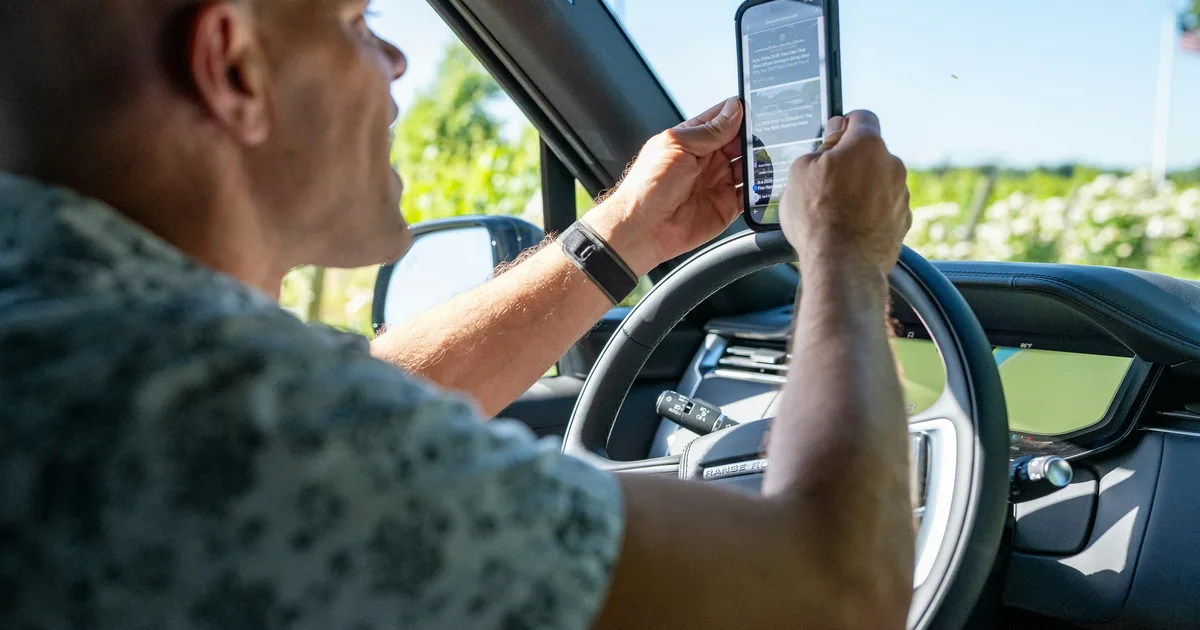
South Carolina has no separate school zone phone rule, but its hands free law applies everywhere, including school zones and pickup lines on public roads. Under § 56-5-3890, as amended by the South Carolina Hands Free and Distracted Driving Act (2025 Act No. 40), a driver may not:
- Hold or support a phone or other mobile electronic device with any part of the body. Earpieces and watches used for voice calls are allowed.
- Read, compose or send any text, email, app interaction or website information.
- Watch a video, movie, game or video call.
The law allows navigation, audio and starting or ending calls without typing, as long as the phone is not held, plus voice to text messages, reporting emergencies and use while lawfully parked or stopped. It also preempts local ordinances, so cities cannot add their own school zone phone bans.
The law took effect September 1, 2025, with a 180 day warning period. According to the South Carolina Department of Public Safety, citations began February 28, 2026. A first offense carries a $100 fine plus court fees, and a second or later offense within three years carries a $200 fine plus court fees and two points. Local costs add up: Live 5 News reported that a first offense costs $232 with court fees in Mount Pleasant and Charleston. For other states, read our guide to phone use in school zones.
Passing a stopped school bus
Under § 56-5-2770, drivers coming from either direction must stop for a school bus stopped with its red lights flashing and wait until the bus moves or the lights turn off. Drivers may not pass a bus with its amber lights on. On a multilane highway, traffic going the opposite direction does not have to stop.
| Offense | Penalty under § 56-5-2780 |
|---|---|
| First offense | Fine of at least $500 or up to 30 days in jail; community service of at least 10 days may replace jail |
| Second or later offense | Fine of $2,000 to $5,000 or 30 to 60 days in jail |
| Great bodily injury to a pedestrian | Felony, $5,000 to $10,000 fine and 60 days to one year in prison |
| Death of a pedestrian | Felony, $10,000 to $25,000 fine and one to five years in prison |
Passing a stopped school bus also adds 6 points under § 56-1-720, half of what it takes to trigger a suspension.
Paying or contesting a South Carolina ticket
South Carolina traffic tickets are uniform traffic tickets handled by magistrate and municipal courts. As the City of Hanahan's court payment page explains, you can either post the bond written on the ticket or appear in court at the date and time shown. Hanahan, like many courts, takes online payments through the South Carolina Judicial Branch's public index site.
Paying the bond is not a neutral step. Under the definitions in § 56-1-10, an unvacated forfeiture of bail and the payment of a fine both count as a conviction, so the points go on your record. If you want to contest the ticket or ask about a traffic education program, contact the court or solicitor's office before your court date. Hanahan also warns that paying 15 or more days late requires paperwork for the SCDMV, and failing to handle it could lead to a license suspension.
Since every South Carolina school zone ticket comes from an officer working the morning and afternoon flasher windows, the best defense is slowing down early. An app like SchoolSlow can alert you as you approach a school zone, so you are at the school limit before the beacons come into view. Neighbors handle school zones differently; see our North Carolina school zone laws and Georgia school zone laws guides.
Frequently asked questions
What is the school zone speed limit in South Carolina?
There is no single statewide number. SCDOT and local governments set each zone after a traffic study under §§ 56-5-1530 and 56-5-1540. SCDOT guidance usually lowers the limit by 10 mph on 35 to 50 mph roads and 15 mph on 50 to 60 mph roads, so always follow the posted sign.
How much is a school zone speeding ticket in South Carolina?
The fine depends on how fast you were going: $15 to $25 up to 10 mph over, rising to $75 to $200 at more than 25 mph over under § 56-5-1520(G). Magistrate and municipal courts add a mandatory assessment equal to 107.5% of the fine, plus other court fees.
Are school zone fines doubled in South Carolina?
No. South Carolina law has no school zone fine increase, so a school zone ticket uses the regular speeding fines and points. A 2026 House bill to protect crossing guards would have added tougher penalties in school zones, but it did not pass.
What are school zone hours in South Carolina?
Each zone follows its signs. SCDOT flashers usually run from 30 minutes before to 15 minutes after the start of school, and from 15 minutes before to 30 minutes after dismissal. Zones without flashers list the hours on a plaque.
How many points is a school zone speeding ticket in South Carolina?
Points depend on speed: 2 points up to 10 mph over, 4 points from more than 10 to under 25 mph over, and 6 points at 25 mph or more over. Twelve points brings a suspension of at least three months.
Can I use my phone in a South Carolina school zone?
Only hands free. Since September 1, 2025, § 56-5-3890 bans holding or supporting a phone while driving anywhere in the state, with citations starting February 28, 2026. A first ticket carries a $100 fine plus court fees.
Does South Carolina use speed cameras in school zones?
No. Section 56-5-710 bars local speeding tickets based on photographic evidence. Bills to allow school zone speed cameras were filed in 2026 but stayed in committee.
Can defensive driving help with a South Carolina school zone ticket?
It can reduce points. Completing the National Safety Council's Defensive Driving Course or an equivalent removes four points once every three years. Separately, a driver with no significant record may qualify for a solicitor's traffic education program for tickets of four points or less.
Sources
- Title 56, Chapter 5, Uniform Act Regulating Traffic on Highways (§§ 56-5-70, 56-5-710, 56-5-1520, 56-5-1530, 56-5-1540, 56-5-2770, 56-5-2773, 56-5-2780, 56-5-3890), South Carolina Legislature, accessed November 2026.
- South Carolina Driver's Manual, South Carolina Department of Motor Vehicles, accessed November 2026.
- Traffic Engineering Guidelines TG 10, School Speed Limit Assemblies, South Carolina Department of Transportation, accessed November 2026.
- Title 56, Chapter 1, Driver's Licenses (§§ 56-1-10, 56-1-720, 56-1-730, 56-1-740, 56-1-770), South Carolina Legislature, accessed November 2026.
- Title 14, Chapter 1, General Provisions (§§ 14-1-207, 14-1-208), South Carolina Legislature, accessed November 2026.
- Greenville County deputies issue over 500 school zone tickets in first 19 days of classes, FOX Carolina, September 28, 2026, accessed November 2026.
- Title 17, Chapter 22, Traffic Education Program (§ 17-22-310), South Carolina Legislature, accessed November 2026.
- 2025 to 2026 Bill 1174, South Carolina Speed Safety Act, South Carolina Legislature, accessed November 2026.
- 2025 to 2026 Bill 5640, South Carolina Speed Safety Act of 2026, South Carolina Legislature, accessed November 2026.
- 2025 to 2026 Bill 4677, School Crossing Guard Protection and Certification Act, South Carolina Legislature, accessed November 2026.
- Hands Free SC, South Carolina Department of Public Safety, accessed November 2026.
- One year in, hands free law leads to hundreds of citations in Lowcountry, Live 5 News, September 3, 2026, accessed November 2026.
- Pay Citations, City of Hanahan Municipal Court, accessed November 2026.